
For parents
6 min readHelp your child practise without pressure
Help your child practise Qur’an at home with gentleness and clear teacher guidance. Find a calm time, encourage effort and get help when a passage is difficult.

In this guide
Your child has opened the page, but the same word is troubling them again. You want to help them learn the Qur’an well, and you can hear the frustration building in their voice. You may be getting frustrated too.
It helps to pause and find out what they need. Sometimes the assignment is unclear. Sometimes they’re tired. Your care in that moment is part of how you help them approach Allah’s words.
Let gentleness guide the correction
The Prophet ﷺ taught:
إِنَّ الرِّفْقَ لاَ يَكُونُ فِي شَىْءٍ إِلاَّ زَانَهُ وَلاَ يُنْزَعُ مِنْ شَىْءٍ إِلاَّ شَانَهُ
Meaning: “Gentleness beautifies whatever it is in, and its removal makes a thing flawed.”
Sahih Muslim 2594a. English rendering of the meaning.
Gentleness has a place in the way we listen, explain and respond when a child gets stuck. You can take recitation seriously and give them time to try. A calm correction can be clear: show the part they’ve been asked to work on, use the teacher’s guidance and let them attempt it again.
If you find yourself raising your voice, pause. Come back when you can help more calmly. You don’t have to solve every difficult word in one sitting.
Begin by finding the assignment together
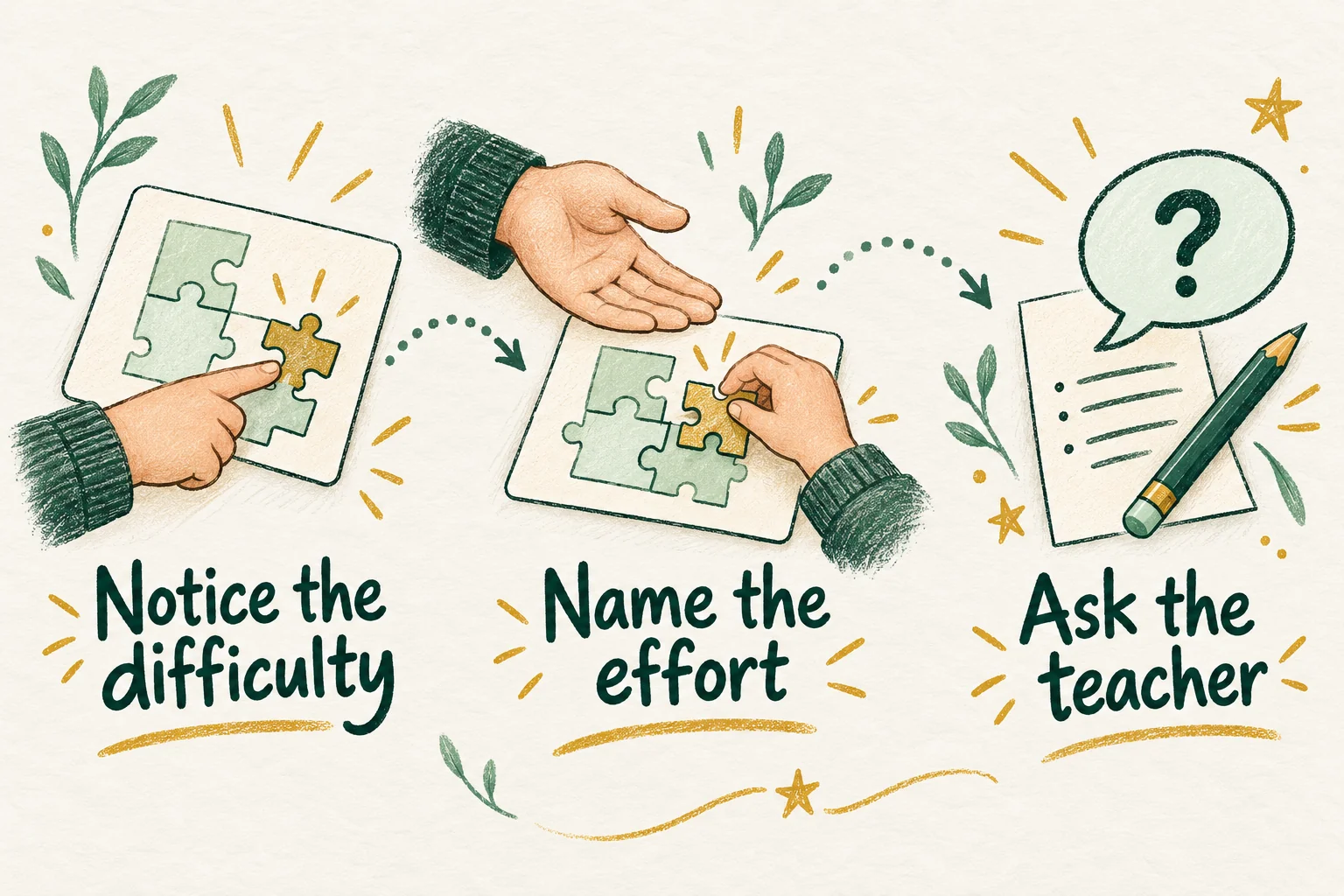
“Can you show me what your teacher asked you to practise?” gives your child somewhere familiar to begin. Find the passage and check any lesson notes.
If neither of you is sure what to do, ask the teacher. You may need the exact ayat, the correction to focus on or an explanation of how to practise it. Clear guidance makes home support easier.
Let your child know what you’ll work on and when you’ll finish. Keep that agreement manageable, so every mistake doesn’t add another round to the session.
Give them a chance to settle
A child arriving home from school may need food, rest or a little time with you first. Look for a moment when they can usually pay attention.
Keep practice from becoming a performance for visitors or siblings. A small choice, such as where to sit, can help them settle. Keep the task itself connected to what their teacher assigned.
Talk about why you make time for the Qur’an in words your child understands. You are helping them learn Allah’s words and use what they learn in worship. You don’t need a long speech before each practice. Your own careful reading, a simple explanation of meaning and the way you treat the mushaf can show that care too.
You don’t have to become their teacher
Tell the teacher how confident you feel checking recitation. They may ask you to find the page, listen or remind your child of a correction already explained in class.
If you don’t know whether a sound is right, avoid guessing. You can still help your child get ready, use recommended audio and make a note of the question. Let the teacher hear the part you couldn’t check.
Even when you recite confidently, follow the current lesson guidance. Several different explanations of the same sound can leave a child unsure which to use.
Notice the effort without making comparisons
“You tried that word again carefully” tells your child what you heard. So does “You remembered the part your teacher helped you with.” Encouragement can be quiet and specific.
Avoid comparing them with a sibling or another learner. Ask the teacher what progress looks like from your child’s starting point.
Give them room to continue reading too. You don’t need to comment on every line or offer a reward for every attempt. Help them notice what they’ve understood and what they can ask about next.
Keep returning with patience
The Qur’an speaks about guiding our families in worship. Allah tells the Prophet ﷺ:
وَأْمُرْ أَهْلَكَ بِالصَّلَاةِ وَاصْطَبِرْ عَلَيْهَا
“Bid your people to pray, and be diligent in ˹observing˺ it.”
Qur’an 20:132, excerpt. Translation: Dr. Mustafa Khattab, The Clear Quran.
This verse concerns prayer and perseverance in it. As we make worship part of family life, it reminds us that we also need to remain committed ourselves. When supporting Qur’an practice, we can bring that patience to the time we make, the example we set and the way we respond to difficulty.
Ask Allah to help your family love and benefit from His words. Then look at the practical help your child needs today. A better time, a shorter assignment or a clearer explanation may make the next sitting easier. Our daily routine guide offers ideas for finding that moment.
When they don’t want to practise
Try asking, “Which part feels difficult today?” They may be worried about getting it wrong, confused by the task or simply exhausted. If they can’t explain, look at the page together. Can they find the passage and tell you what they were asked to do?
If practice becomes upsetting, pause and speak with the teacher when everyone is calmer. Describe what happened and ask what to change. Don’t assume reluctance tells you what is in your child’s heart.
A concern about conduct or safety needs the provider’s safeguarding or complaints process. It should receive attention, even if other parts of the lessons are going well.
Take one useful question to the next lesson
A short note can be enough: “They keep needing help going into the last ayah. Could you show us how to practise that join?” Keep the latest advice nearby for next time.
If you’re still choosing lessons, our guide to online classes for children explains what to ask. You can also see how the academy connects lessons and home practice.
Questions parents often ask
What if I don’t know enough Qur’an to help?
Tell the teacher. Finding the assignment, preparing for practice and passing on questions are useful support. You can leave uncertain recitation to someone able to check it.
Should I use rewards?
Notice whether they help your child begin or lead to arguments over every attempt. Keep recognising effort and understanding. If rewards are making practice harder, talk with the teacher about another approach.
What if practice keeps ending in tears?
Pause and discuss the recurring difficulty. The timing, amount or explanation may need to change. More repetitions won’t tell you why your child is distressed.
For wider educational context, the Education Endowment Foundation’s guidance on working with parents discusses home learning in schools. It does not evaluate a particular Qur’an teaching programme.