Teachers & learning
6 min readHow to choose a Qur’an teacher
Learn how to choose a Qur’an teacher for you or your child. Ask about training, patient correction, meaning and the practice you’ll take home between lessons.
In this guide
Choosing a Qur’an teacher is a decision you want to feel comfortable with. You’re trusting someone to help you read Allah’s words, or to introduce your child to them. A profile can tell you where a teacher studied. A conversation, and a chance to hear how they teach, can tell you something about learning with them.
You don’t need to know all the right questions before you begin. Start with what you’d like help with, and notice whether you feel able to say, “I didn’t understand that. Could you show me again?”
Look for someone who cares about learning and teaching
The Prophet ﷺ spoke of the virtue of learning and teaching the Qur’an:
خَيْرُكُمْ مَنْ تَعَلَّمَ الْقُرْآنَ وَعَلَّمَهُ
Meaning: “The best of you are those who learn the Qur’an and teach it.”
Sahih al-Bukhari 5027. English rendering of the meaning.
That gives this work a purpose worth taking seriously. As you speak with a prospective teacher, ask about their studies and their experience with learners like you. Someone who regularly helps adults begin reading may explain a sound differently from someone teaching advanced recitation.
If they mention an ijazah, ask what it covers and how it relates to your lessons. An ijazah is an authorisation whose scope should be explained by the teacher or academy. You can also ask how the academy checks its teachers’ qualifications. The hadith honours the work of teaching; you still need to understand a particular teacher’s training and approach.
Tell them where you are now
Perhaps you recognise the Arabic letters but struggle to join words. Perhaps you’ve learned short surahs by listening and would like someone to check them. Or you’re memorising and need help keeping earlier passages.
Let the teacher hear a little of your reading. You don’t have to prepare a polished performance. Hearing the parts you find uncertain helps them choose a useful starting point.
For your child, mention previous lessons and anything that might help them settle. For yourself, talk about work, family and the practice time you usually have. Those details matter when you agree what to learn between classes.
Notice how they help you with a mistake
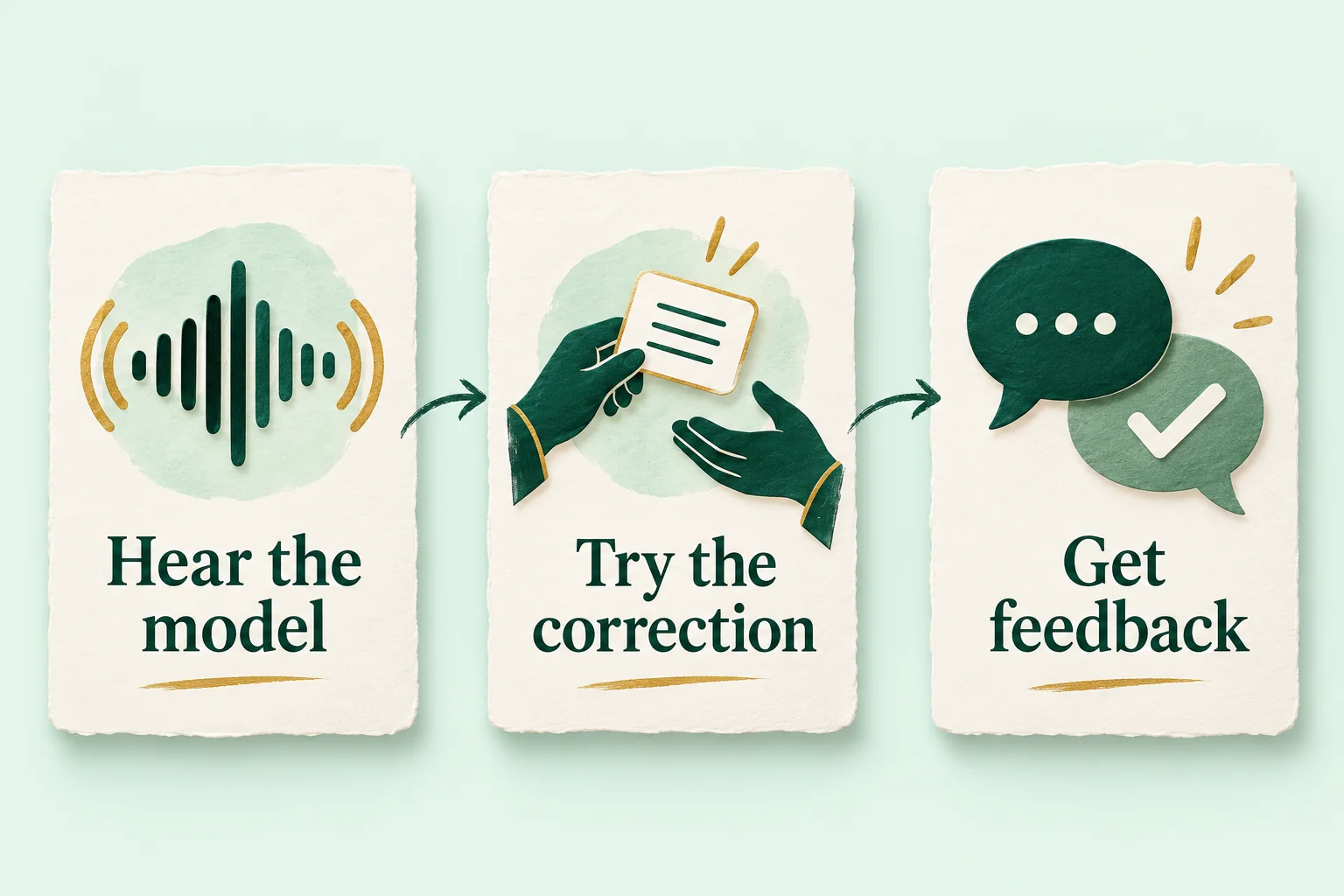
A patient teacher can be careful about accuracy while making questions welcome. They might read a sound for you, explain how to make it, then listen while you try again.
If you still can’t hear the difference, ask them to show you once more. Does the explanation become clearer? Do you have time to practise? You should leave understanding something about the correction, even when you need more practice before it feels familiar.
For a child, notice those hesitant moments. Are they given time to answer? Can they ask for help without being embarrassed? Respect for the Qur’an should show in the care given to both the recitation and the learner.
Ask how meaning will have a place in your learning
Allah describes the Qur’an’s guidance:
إِنَّ هَٰذَا الْقُرْآنَ يَهْدِي لِلَّتِي هِيَ أَقْوَمُ
“Surely this Quran guides to what is most upright”
Qur’an 17:9, excerpt. Translation: Dr. Mustafa Khattab, The Clear Quran.
Learning to pronounce the words carefully matters. So does growing in understanding of the guidance we recite. Ask how the teacher introduces meaning at your level, perhaps through a short explanation or a recommended translation.
A beginner doesn’t have to take on Arabic language study, detailed tafsir and memorisation all at once. You can ask how these fit together over time. When a question needs a more detailed religious explanation, a teacher should be able to recognise that and direct you to appropriate knowledge.
Leave knowing what to practise at home
Before the lesson ends, find the assigned passage together. Ask which correction to focus on and how to practise it. “Revise more” can be difficult to act on when you’re alone with your mushaf, the written copy of the Qur’an, open in front of you.
If your week is busy, say so. Ask what to prioritise on a day when you have less time. For hifz, or memorisation, discuss how earlier work will stay in your practice alongside new verses. Our revision guide offers a starting point for that conversation.
Check the arrangements too
Ask about class times, the language used and whether lessons are individual or shared. Find out what happens if your usual teacher is unavailable or you miss a class.
Before paying, check the fees and cancellation terms in writing. For online lessons, ask about recordings, privacy and who can contact your child. Parents should know the provider’s safeguarding arrangements and where to raise a concern. Our guide to online Qur’an classes for children covers those questions.
Be cautious about pressure to enrol before your questions are answered, or a promised completion date before the teacher has heard you. Concerns about safety or conduct need the provider’s appropriate reporting process.
What should you ask your teacher first?
You might begin, “I’d like to improve my recitation, but I’m not sure where to start. Could you listen to me read and help me work out what to focus on?”
Then ask what the first few lessons could involve and what you’ll practise at home. For your child, you might ask, “How will you find out what they already know, and how can I help them between lessons?”
You don’t have to ask everything in one call. After a few lessons, bring up anything still unclear. Are the corrections making sense? Is the practice manageable? A teacher who knows what is happening at home has a better chance of helping.
If you’re beginning as an adult, our adult learning guide may help you prepare. You can also see how lessons at the academy work.
A few questions you might still have
Can a teacher check recitation online?
They need to hear you clearly. Test the sound before class and tell them if the connection breaks up. Ask to repeat a part they couldn’t hear properly, especially during a correction.
What if I’m nervous about the first lesson?
Tell the teacher. Ask whether you can start with a familiar passage or with letters if you’re beginning. If you would feel more comfortable learning individually, ask what options are available.
How will I know whether the lessons suit me?
Notice whether you can ask questions, understand what to practise and see the teacher returning to difficult parts with you. Bring up problems with the pace or explanation. You can take time to decide whether the arrangement helps you learn.