Memorization
6 min readHow to memorise the Qur’an
Learn how to memorise the Qur’an with sincere intention, careful recitation and teacher guidance. Start with a manageable passage and make room for revision.
In this guide
You may have been thinking about memorising the Qur’an for some time. Perhaps you want to carry more of Allah’s words into your salah, or return to surahs you learned years ago. Looking at the whole task can feel daunting. Your first step can be much smaller: a passage you can read carefully, with someone to guide you.
Allah says:
وَلَقَدْ يَسَّرْنَا الْقُرْآنَ لِلذِّكْرِ فَهَلْ مِنْ مُدَّكِرٍ
“And We have certainly made the Quran easy to remember. So is there anyone who will be mindful?”
Qur’an 54:17. Translation: Dr. Mustafa Khattab, The Clear Quran.
This invitation to remembrance gives us hope as we turn towards the Qur’an. It doesn’t mean every passage will come easily or that everyone will finish at the same pace. You can begin with trust in Allah, ask Him for help, and give the learning the care it needs.
Begin with why you want to learn
Before choosing a daily target, take a moment to remember what brings you to hifz, the memorisation of the Qur’an. You may want to recite more confidently in prayer, deepen your relationship with Allah’s words, or learn alongside your family.
The Prophet ﷺ taught:
إِنَّمَا الأَعْمَالُ بِالنِّيَّاتِ
Meaning: “Actions are judged by intentions.”
Sahih al-Bukhari 1, excerpt. English rendering of the meaning.
Keep that intention close when you plan your practice. A page count can help you organise the week, but comparison with someone else’s progress can distract you from learning your own passage well. Ask Allah to make your learning sincere and beneficial, then choose an amount you can give attention to.
Let a teacher hear your reading
Have your chosen passage checked before repeating it many times. If a sound needs correcting, it’s easier to work on it before it becomes part of what you remember.
Tell your teacher about any surahs you already know and how you learned them. Perhaps you followed recordings, or studied as a child. Give them an honest picture of the time you usually have for practice.
If you’re still learning letters or joined words, reading may need to be your first focus. Ask how memorisation can fit alongside it. Our guide to choosing a Qur’an teacher can help you find that support.
Choose a portion you can learn carefully
Agree the beginning and end of your passage with the teacher. Ayat, or verses, vary in length, so a fixed number won’t suit every passage or learner.
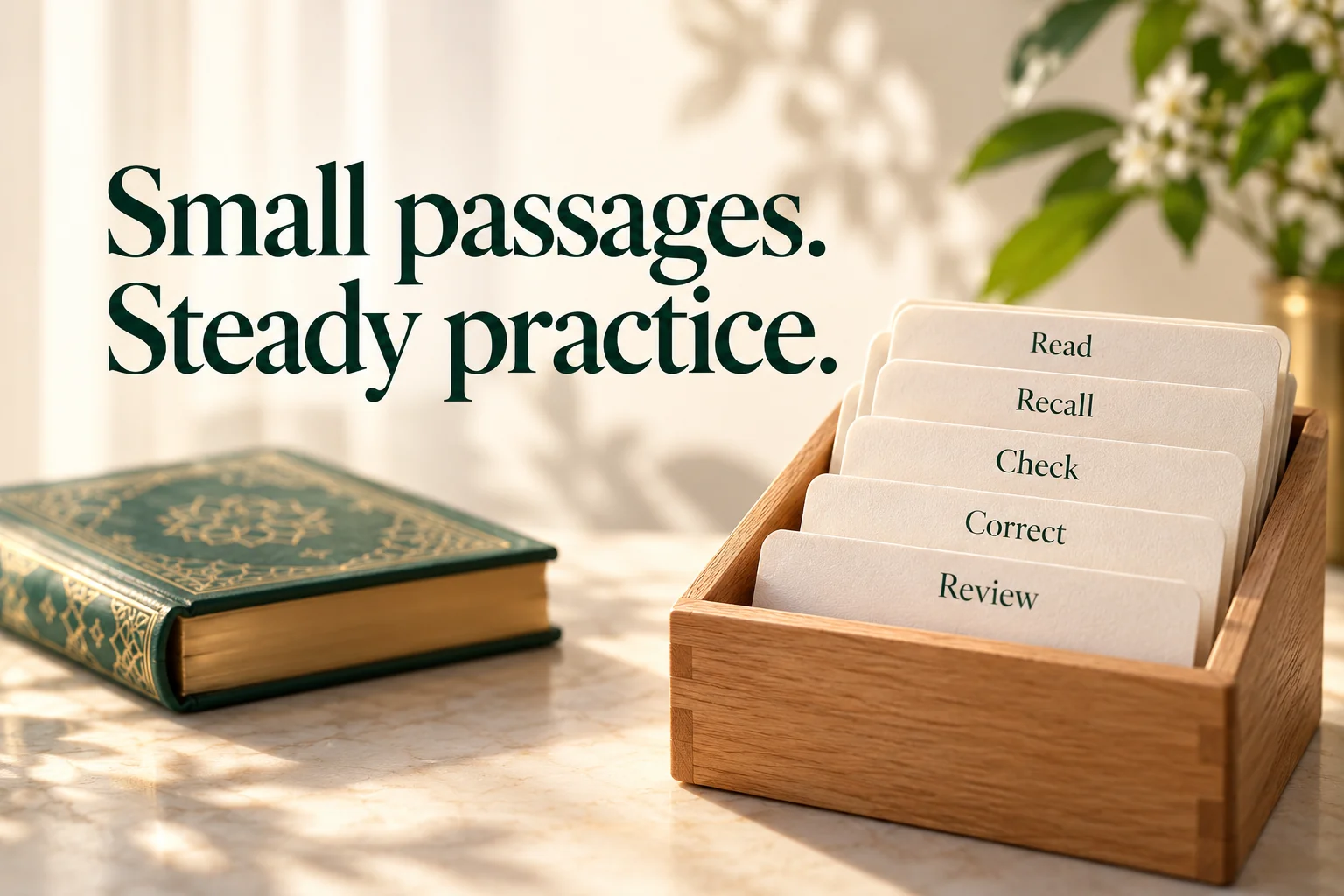
Leave time to listen, read, try from memory and correct mistakes. Your mushaf is the written copy of the Qur’an; keep the assigned portion easy to find in the copy you normally use. Ask about stopping points you’re unsure of.
When a reliable translation helps you understand the passage, use it alongside your learning. Bring questions about meaning to your teacher rather than guessing from a single English word. Understanding deserves time too.
Listen, then try your own recitation
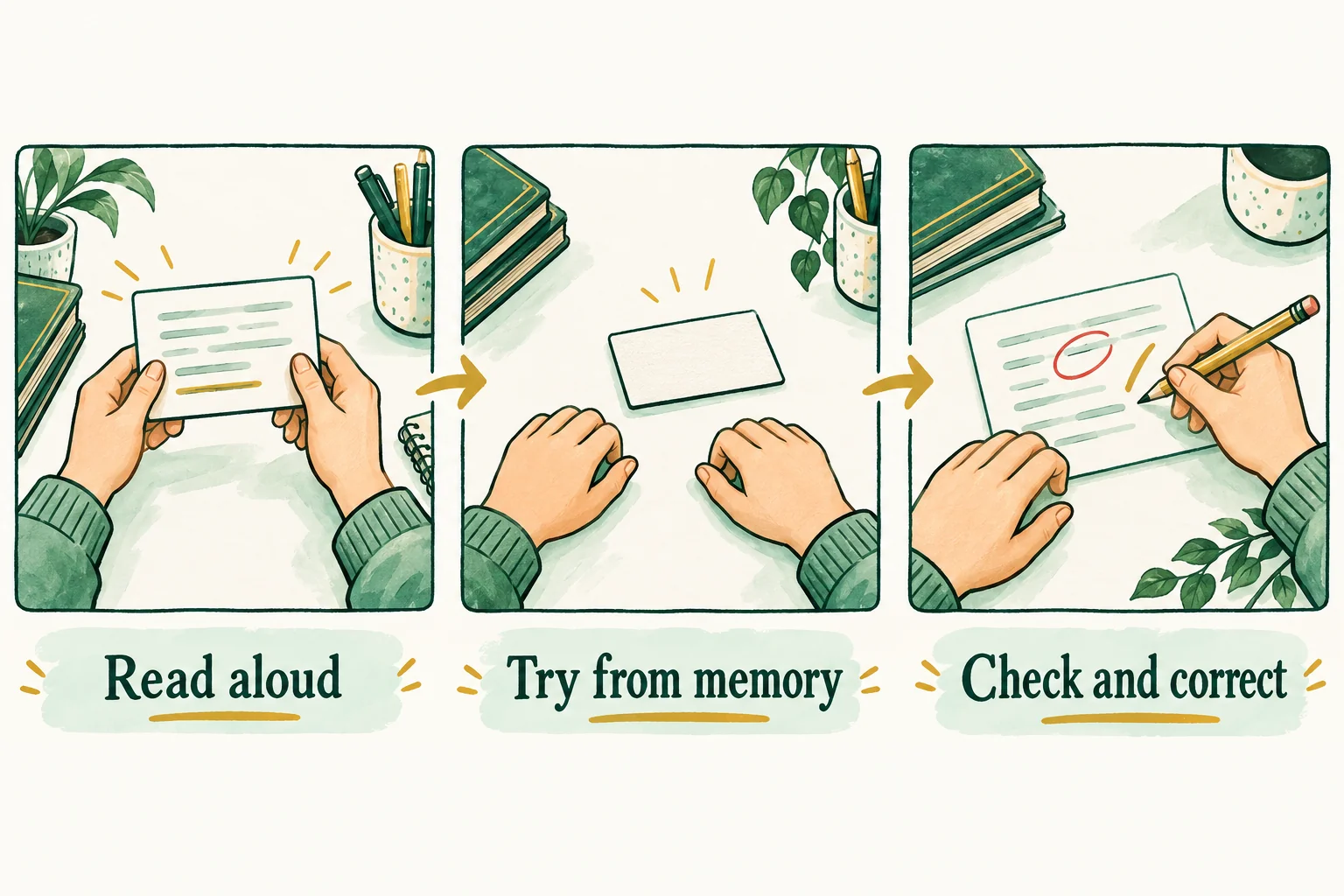
Follow the text while listening to a recitation your teacher recommends. Read aloud slowly enough to notice the sounds. Listening gives you a model; someone hearing your own attempt can help you with what you’re doing differently.
Work through a small section, then look away and try it from memory. Check the places where you hesitate. Practise the corrected part and try again before bringing it into the surrounding passage.
You don’t need to change methods each time something feels difficult. Look at where you get stuck. A word you can’t yet read needs different help from a transition you keep forgetting. If the same error comes back, mark it for your teacher instead of rehearsing it over and over.
Give the joins a little extra attention
You may know two sections separately and hesitate when moving between them. Practise the end of the first with the beginning of the next, then return to the full passage.
Tell your teacher exactly where this happens. “I know this ayah, but I lose my place going into the next one” gives them something useful to listen for. A few words in your notes can be enough to remember the question.
Keep returning to earlier verses
A passage can feel familiar just after practice and need more help tomorrow. Return to it and notice whether you can begin without a prompt. Let your teacher hear it again before assuming it is settled.
Muraja’ah means revision. Give it a place alongside new learning from the beginning, so the verses you’ve already learned remain part of your week. As your memorisation grows, you may need to spend more time returning to earlier work.
Our revision guide explains one way to organise recent and older passages. General learning research also supports recall practice and study spread over time, though it does not set a Qur’an memorisation method or pace.
When progress feels slow
A difficult passage can be discouraging, especially when you had hoped to move on. Tell your teacher what is happening. They may need to explain a sound again, help with a join or reduce the amount for a while.
Be specific about the difficulty rather than calling yourself “bad at memorising”. You can continue asking Allah for help while taking those practical steps. Slow progress is not something we can use to judge a person’s sincerity.
If finding time is the difficulty, our daily Qur’an routine guide can help. If you’re looking for lessons, see how the academy supports learning and home practice.
Questions about beginning hifz
How long will it take?
That depends on your reading, available time and revision needs. Discuss pace once your teacher has heard you and seen how practice goes. The amount may change as you have more to revise.
Can I practise between lessons on my own?
Yes. Use the assigned passage and recommended audio, and bring uncertain sounds or recurring mistakes back to your teacher. Regular listening from someone knowledgeable helps keep your recitation accurate.
Should I learn something new every day?
Some days may be for revision or correction. If earlier work is getting harder to recall, discuss giving it more attention before increasing new memorisation. You are still caring for the Qur’an you have learned.