For adults
6 min readLearning the Qur’an as an adult beginner
Begin learning the Qur’an as an adult with patient guidance. Find your starting point, prepare for a first lesson and practise around work and family.

In this guide
Perhaps you’ve wanted to learn the Qur’an for years and never quite known how to begin. You may recognise a few Arabic letters, remember lessons from childhood, or recite short surahs learned by listening. Whatever brings you back now, you can tell a teacher where you are and ask for help.
If reading aloud feels uncomfortable, you don’t have to pretend otherwise. A first lesson can begin with something suited to your level, including the letters themselves.
There is hope in the effort you’re making
The Prophet ﷺ spoke about the person who finds recitation difficult:
وَالَّذِي يَقْرَأُ الْقُرْآنَ وَيَتَتَعْتَعُ فِيهِ وَهُوَ عَلَيْهِ شَاقٌّ لَهُ أَجْرَانِ
Meaning: “The one who recites the Qur’an, faltering in it and finding it difficult, has two rewards.”
Sahih Muslim 798a, excerpt. English rendering of the meaning.
That is encouragement to keep learning when the words don’t yet come easily. The hadith also honours proficient recitation. We can take hope from it while seeking help to improve.
A sound you haven’t understood is something to bring to your teacher. You can ask to hear it again, take more time and continue practising. Difficulty doesn’t make your effort unwelcome.
Begin with what you know now
Tell the teacher what you’ve learned before, even if it feels incomplete. You might recognise individual letters and find them harder when joined. Or you might read comfortably but be unsure about particular sounds.
A teacher can listen to a suitable passage, or begin with letter recognition if you don’t read Arabic yet. Ask what materials you’ll use and what the first lessons will involve. By the end, you should understand the work you’re taking home.
You don’t need to make an apology for your starting point. If you’re unsure how to describe it, ask the teacher to help you find it through the lesson.
Talk about the learning you hope for
You may want to recite more confidently in salah, begin memorisation or understand more of what you read. Tell the teacher what matters to you.
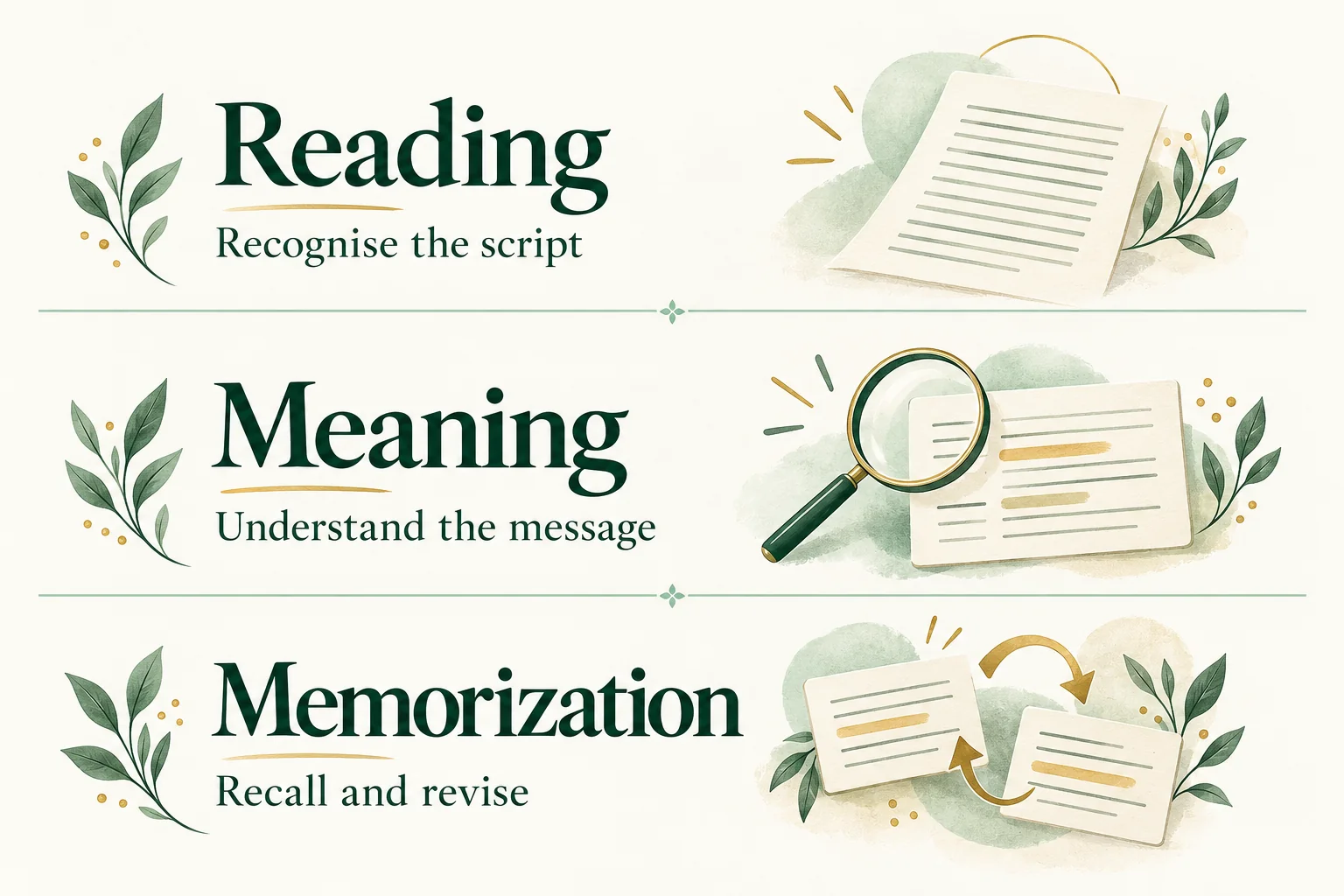
Reading Arabic script, learning the language and memorising involve different kinds of work. They support each other, but you don’t have to take on everything at once. A reliable translation can help with meaning while your teacher guides pronunciation.
If hifz, or memorisation, is your goal, have the chosen passage checked first. Revision will help you keep what you learn. You can discuss how to introduce those parts as your reading develops.
What should you ask in the first lesson?
You might say, “I learned some surahs by listening, but I’ve never had them checked,” or “I know the letters, but I get stuck when they’re joined.”
Then ask what to practise before the next class and how to work on the difficult part. Tell the teacher which days are usually busy. That helps you agree an amount you can manage around work or family.
If you would feel more comfortable learning individually, ask what options are available. Our guide to choosing a Qur’an teacher has more about those early conversations.
Give the corrections time
You may hear a difference before you can produce it reliably. Ask your teacher to model the sound, listen to your attempt and explain it another way if needed.
Keep the practice focused enough that you can remember what you were asked to change. Bring back the same word if it remains uncertain. Returning to it is part of learning.
As lessons continue, talk about the pace. Can you usually complete the assignment? Is an earlier skill still difficult? There is no first-month deadline that every adult must meet. Let the teacher know what is happening between classes.
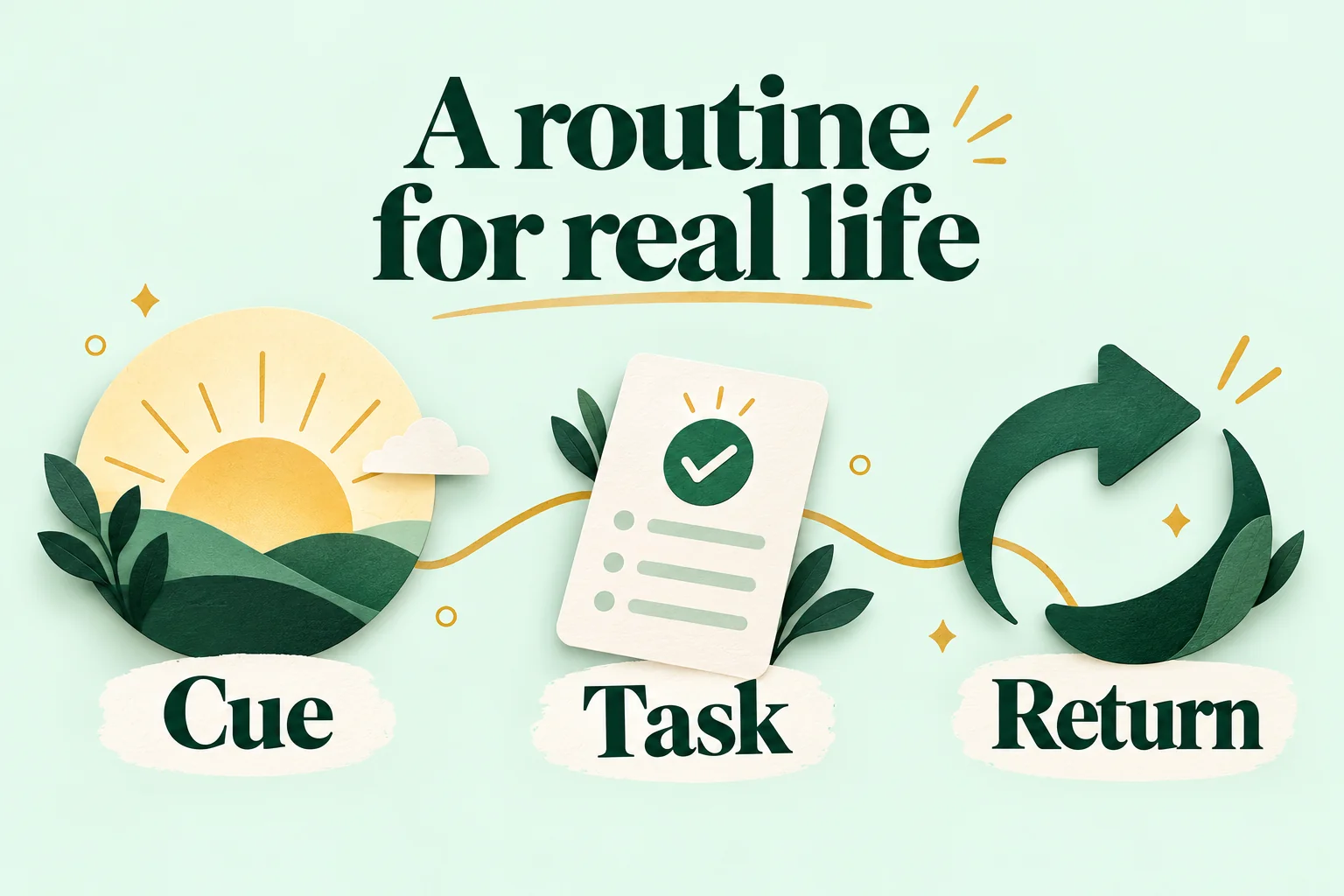
Make a little room in your week
An uninterrupted hour may be hard to find. Look for a moment you can usually use, perhaps after a prayer, before the school pickup or after your first meal at home if you work shifts.
Ask which smaller task to focus on when time is short. If the full assignment is often more than you can manage, discuss changing it. Leave time to read carefully and revisit the teacher’s corrections.
Keep useful tools close: your reading materials, recommended audio and a place to note questions. You don’t need to compare every app before practising the passage you have. Our daily Qur’an routine guide can help you find a regular moment.
Ask Allah for knowledge as you learn
The Qur’an includes this prayer, in a verse addressing the Prophet ﷺ about revelation:
رَّبِّ زِدْنِي عِلْمًا
“My Lord! Increase me in knowledge.”
Qur’an 20:114, excerpt. Translation: Dr. Mustafa Khattab, The Clear Quran.
You can make this du‘a as you seek knowledge. Ask for help understanding and benefiting from Allah’s words, while continuing the learning in front of you.
As your reading grows, take time with meaning too. A short passage with a trustworthy explanation can give you something to reflect on and bring into daily life. Ask your teacher about suitable translations and where to take questions that need more detailed explanation.
Notice what is becoming clearer
Perhaps a letter is easier to recognise, a joined word needs less help or a correction finally makes sense. Ask the teacher what they notice in your reading.
Someone else’s pace can’t tell you what your next lesson should be. You can learn from where you are and keep asking for the help you need. May Allah grant you beneficial knowledge and make your learning a means of drawing closer to Him.
To learn about the academy’s approach, explore learning for adults or see how classes work.
Questions adult beginners ask
Am I too old to start?
You can begin learning as an adult. Look for a teacher experienced with adult beginners and discuss your starting point and available time. You don’t need to know more before asking for help.
Do I need to understand Arabic first?
Reading the script and understanding the language are related but different skills. Your teacher can help you choose a starting point and bring meaning into the lessons appropriately.
What if I miss a week?
Tell the teacher and ask where to pick up. Revisit a manageable amount of earlier work. If your circumstances have changed for longer, discuss adjusting the plan.
If memorisation becomes your next step, our beginner’s hifz guide explains how reading, recall and revision can fit together.