Academy life
11 min readHow The Hifz Academy works: a clearer path through your Qur’an journey
See how assessment, home preparation, teacher-led recitation and revision fit together at The Hifz Academy, for children and adult learners.
In this guide
Perhaps you’re hoping your child will grow up with the Qur’an in their heart, able to recite it confidently and keep returning to it throughout their life. Or maybe that hope is your own. You memorised some Qur’an years ago, life became busy, and now you’re thinking about beginning again.
Then come the practical questions. Where do I start? Who will guide me? How will I keep what I’ve already learnt strong while learning something new?
We hear these questions when we speak to families and adult learners. Sometimes a parent tells us their child is memorising, but they can’t see steady progress. Sometimes an adult wants to return but needs help fitting practice around work.
Alhamdulillah, the desire to learn is there. We want to help you turn that desire into work you understand and can keep coming back to, with a teacher who knows where you need support.
That’s why we built The Hifz Academy.
Excellent teachers, with a system that supports the learning
The idea for the Academy grew out of our own experience of Qur’an learning. We saw how much difference an excellent teacher makes. We also saw how much clearer the journey becomes when the teaching is supported by a system that keeps track of the learner.
What did you prepare? Where did you struggle? What should you work on before the next class? Is your earlier memorisation keeping pace with the new pages?
Those questions need answers throughout the journey.
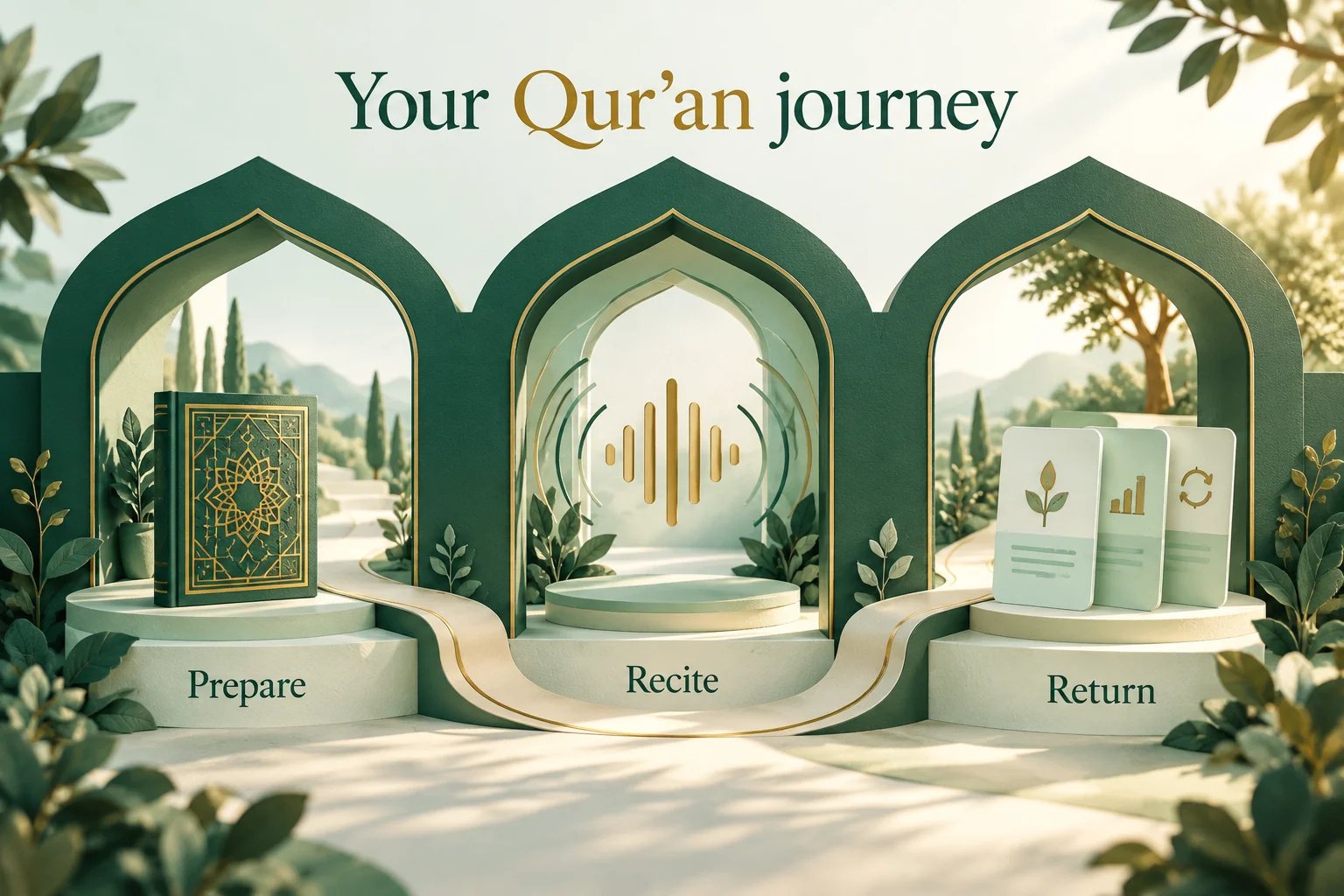
At The Hifz Academy, you prepare your Qur’an before class, recite directly to a teacher and leave with guidance on what to practise next. Your new lesson, recent revision and older revision stay connected. HifzFlow, the learning platform we’ve built for the Academy, helps keep that work together between sessions.
Our hope is that, as you progress, you can recite what you’ve learnt with greater confidence and carry it into your worship. For some learners, that may lead towards leading Tarawih or preparing for a Qur’an competition, with their teacher’s guidance. The relationship with the Qur’an continues well beyond completing memorisation.
First, let us hear where you are
You don’t need to arrive with a perfect plan.
Perhaps your child has memorised a juz, one of the Qur’an’s thirty divisions, but still needs prompts in places. Perhaps you learnt several juz as a child and haven’t revised them consistently. You might be beginning with much less and wondering whether hifz, memorising the Qur’an, is something you can work towards.
Tell us.
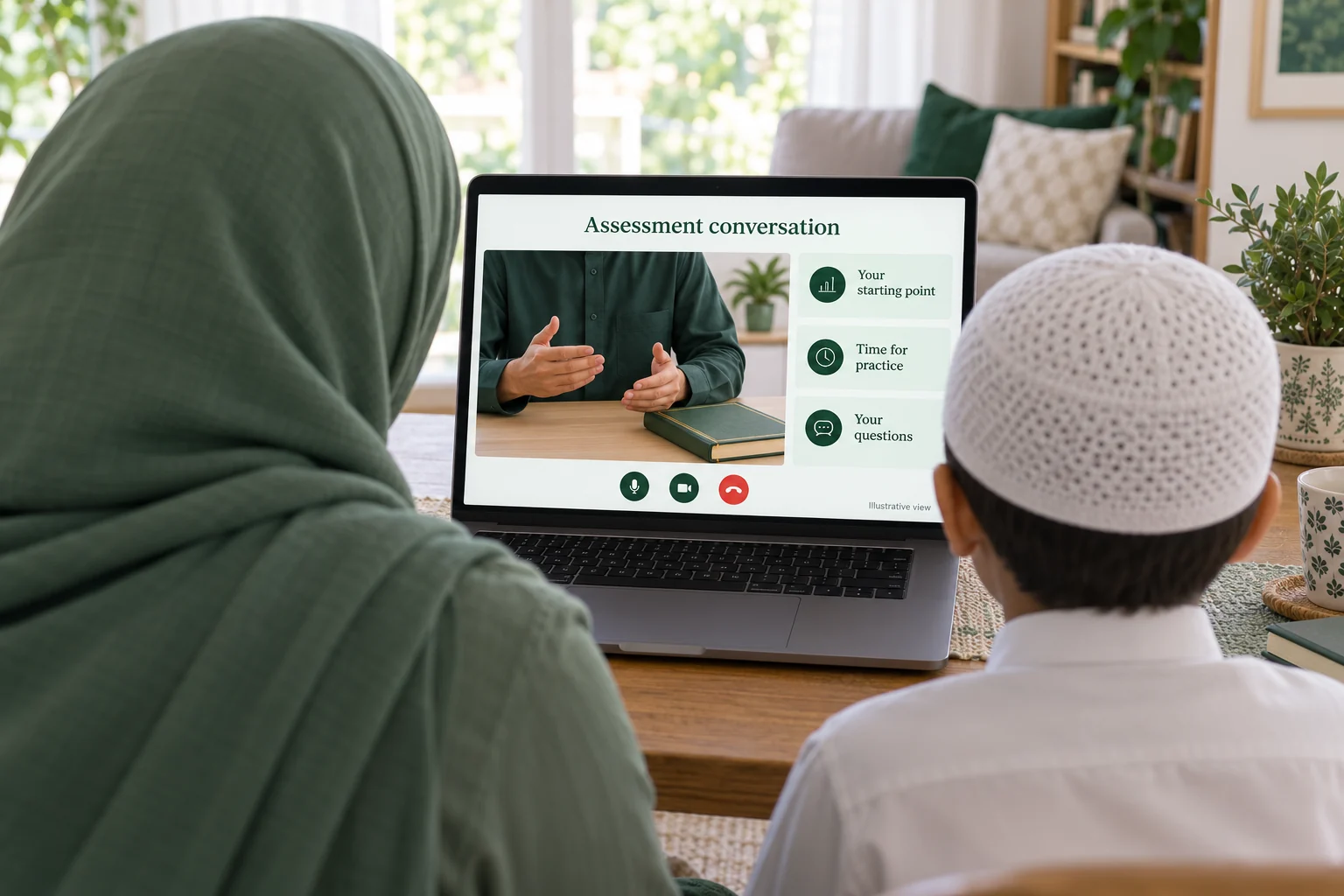
Through intake and assessment, we learn about your previous study, listen to your recitation and discuss what you want help with. We also need to understand your week. How much time can you give to practice? What responsibilities do you have? For a child, what support is available at home?
Your teacher then helps establish a suitable place to begin. That might involve new memorisation, repairing earlier passages or giving pronunciation and tajweed more attention. Tajweed is the practice of reciting with the appropriate pronunciation and recitation rules.
This is also the time to explain anything you’re concerned about. If your child needs patience while gaining confidence, say so. If you’re returning after a long break, tell us what you remember and what feels difficult.
We want to understand the learner in front of us.
Agree on a goal, then work towards it together
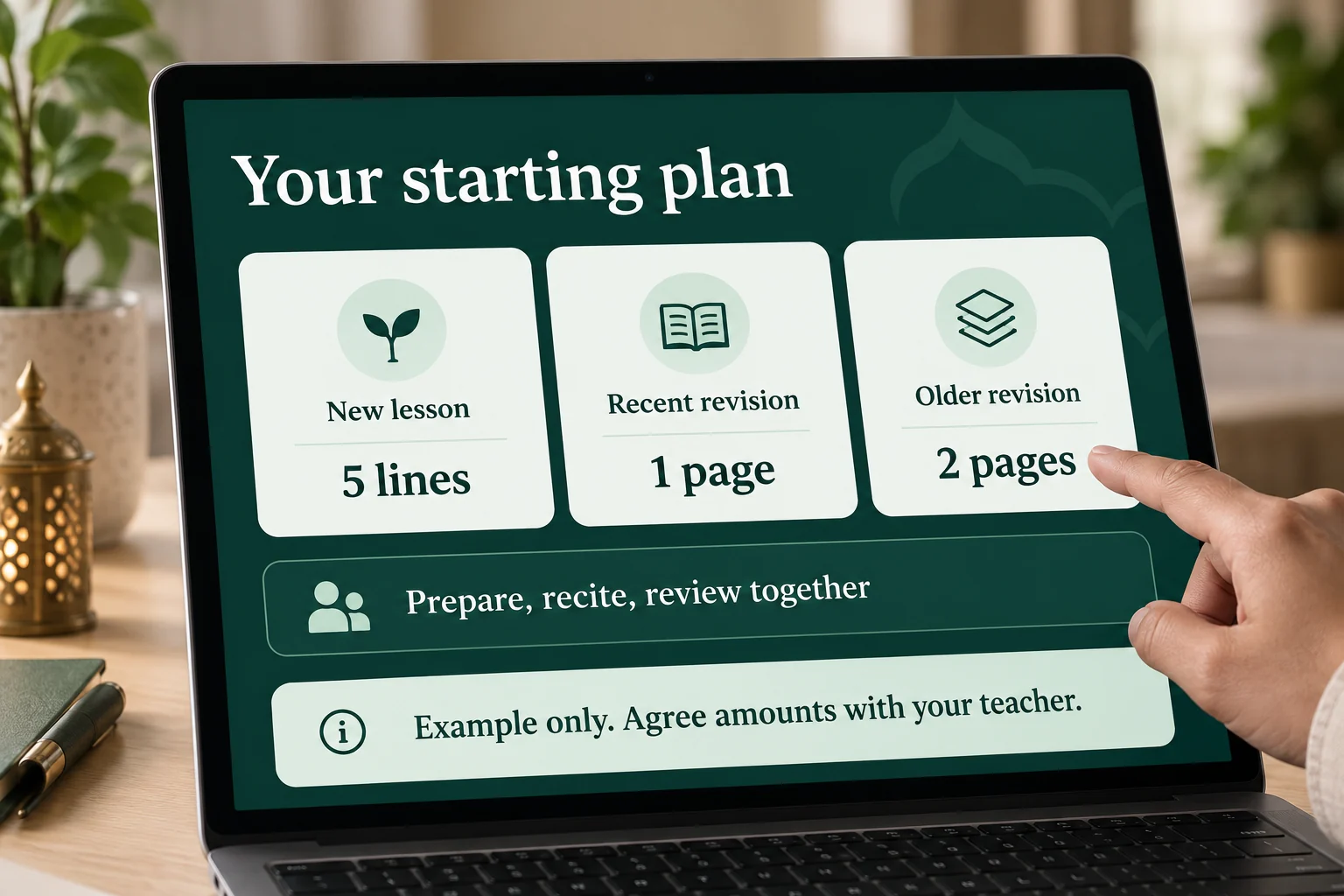
Once we understand your starting point, we discuss the amount you’ll work towards.
For a child, that conversation includes the parent. You know the school routine, the evenings that are crowded and how much help your child needs to sit down and practise. For an adult, we discuss the time you can give alongside work and other responsibilities.
The goal should give you something clear to work towards. It also gives the teacher a way to follow your progress and notice when something needs attention.
We do expect commitment. Coming prepared, attending regularly and acting on correction are part of being a student here. If we agree on an amount, we’ll follow up on it.
And if you’re struggling, we need to understand why. Is the passage too much? Are earlier lessons becoming weak? Is practice happening regularly? Does something in the correction need explaining again?
Those conversations help us decide what to change. Your teacher may adjust the amount or spend longer strengthening a passage before moving forward. Completing a page and being ready to pass it are different things.
There is no single completion date that fits every learner. We want your progress to include Qur’an you can continue reciting after the lesson has passed.
Your learning has three connected parts
When you come to class, we need to hear more than the newest passage.
Your learning is organised around three areas:
| Area | What you prepare |
|---|---|
| New lesson | The fresh passage you’re working to add to your memorisation |
| Recent revision | Passages you’ve learnt recently and are still strengthening |
| Older revision | Earlier memorisation that needs regular return and care |
You may know these by names such as sabaq, sabqi and dawr. The terms vary between communities. We use “new lesson”, “recent revision” and “older revision” so that the work is clear to everyone.
You might recite today’s new lesson well, then hesitate over something you learnt last month. We want to notice that while it can still be addressed in your preparation.
The Prophet ﷺ instructed us:
تَعَاهَدُوا الْقُرْآنَ
“Keep returning to the Qur’an.”
An excerpt from Sahih al-Bukhari 5033; English rendering of the meaning by The Hifz Academy. In the full narration, the Prophet ﷺ describes how readily memorised Qur’an can slip away. Returning to it regularly belongs throughout the journey.
As your memorisation grows, your revision responsibilities grow too. Your plan needs room for both.
You prepare at home, then come ready to recite
A great deal of hifz happens when you sit down with your mushaf between classes.
Your teacher guides the work. You give the assigned passages time and attention, then come ready to recite them. That allows the teacher to spend your turn listening carefully, correcting you and helping you understand what needs improvement.
Preparation includes your revision as well as your new lesson. If you’ve spent all your time on the new passage and haven’t managed the older work, be honest about it. Your teacher needs to know.
For parents, being part of the journey can mean protecting a regular practice time, helping your child find the assigned portion and noticing where they keep asking for a prompt. If you’re unsure how to correct something, bring the question to the teacher.
For adults, it means making a place for Qur’an within the week you actually have. A smaller amount prepared consistently gives your teacher something useful to work with.
Our guide to steady Qur’an memorisation practice explains how to approach a manageable passage and check what you can recall.
In class, you recite directly to a teacher
When it’s your turn, the teacher listens to you individually.
The online classroom organises the work into focused rooms for the new lesson, recent revision and older revision. You join the relevant room and recite the work assigned to you.
Your class window includes individual recitation turns within the wider session. It doesn’t mean a whole private hour with a teacher. Before you enrol, we’ll discuss the available class arrangements and what your participation involves.
Ustadh Ma’ruf Hussain leads the Academy’s academic programme. The teacher responsible for your new lesson decides whether it is ready to pass. Other members of the teaching team may listen to recent and older revision.
We know some families are looking for continuity with one teacher. Tell us if that is a priority. We’ll explain who will oversee your learning, who may hear different parts of your work and what happens when a teacher is unavailable.
You should understand those arrangements before joining, including how guidance stays connected when more than one teacher is involved.
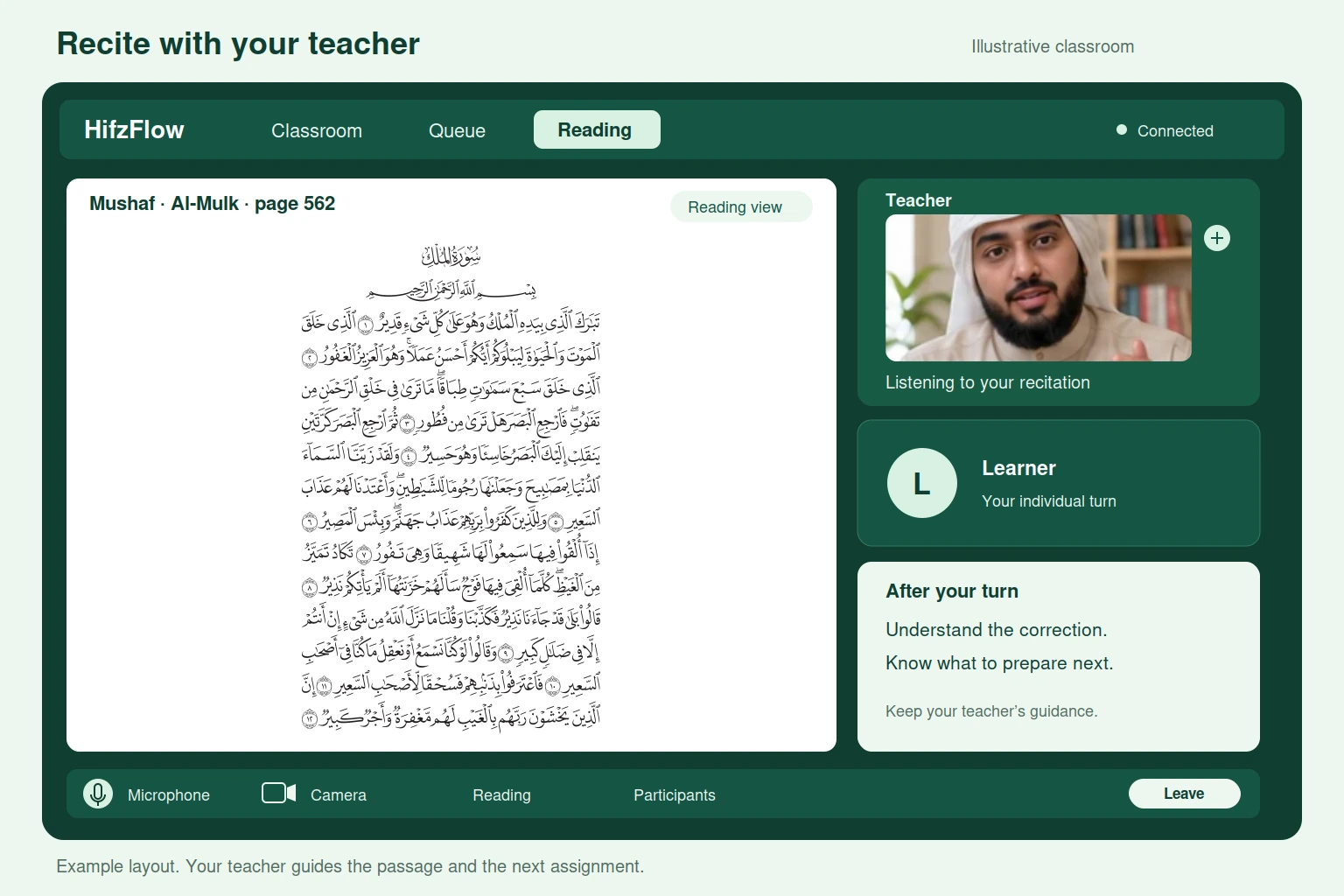
Revision means being able to begin in different places
Imagine you’ve learnt a surah and can recite it comfortably from the beginning. Then your teacher asks you to continue from somewhere in the middle, and suddenly you hesitate.
That gives the teacher useful information. The beginning is familiar, but another part needs more attention.
For revision, we use spot tests: the teacher asks you to recite from different places within your assigned portion. This helps identify weak passages, difficult joins and places where similar verses may be getting mixed up.
You prepare the whole assigned portion, because the question could come from different places within it. Over time, the teacher uses what they hear to guide further practice and checks.
A spot test samples your recitation. Regular revision and further listening are still needed to understand how securely the rest is held.
We want you to become more comfortable reciting the Qur’an you’ve learnt from different starting points, with the teacher helping you strengthen the places that need work.
Know what to correct before the next lesson
Your teacher listens for memorisation and tajweed, and may also guide the quality of your recitation.
Perhaps you missed a word. Perhaps you remembered it but pronounced a letter incorrectly. Perhaps you knew two passages separately but couldn’t connect them. Each needs guidance you can act on when you practise again.
Allah says:
وَرَتِّلِ الْقُرْآنَ تَرْتِيلًا
“and recite the Quran ˹properly˺ in a measured way.”
Qur’an 73:4, excerpt; translation by Dr. Mustafa Khattab, The Clear Quran. The surrounding verses address the Prophet ﷺ concerning night prayer. As learners, we have reason to give care to how we recite, even when we’re eager to memorise more.
Beautiful recitation can receive attention too, according to your level and the teaching available. Memorisation and tajweed remain central to decisions about progressing.
Before the next lesson, you should understand what was accepted, what needs another attempt and what to prepare. If the correction isn’t clear to you, ask. We want you to be able to work on it.
Keep the learning connected through HifzFlow
After class, it can be difficult to remember every correction or explain to a parent exactly what happened.
HifzFlow helps keep assignments, teacher feedback, marks and lesson history together. Students can follow the work they’re responsible for, and linked-parent access helps a parent follow their child’s learning.
That gives you something specific to discuss. Where does your child need help? Is the same difficulty appearing again? What has the teacher asked them to prepare?
Ask us to show you how the student or parent view works with your enrolment, including any monthly reporting provided. You should understand where to find guidance and how to raise a question.
The teacher remains responsible for the academic decisions. The platform helps keep the context available so that the next conversation can build on the previous lesson.
The days between classes are part of the journey
Your Qur’an needs attention beyond the days you meet a teacher. Your agreed plan should help you understand what to practise between sessions and how to balance new learning with revision.
You may also have opportunities to recite with other students. Listening to someone else, taking your own turn and encouraging one another can make regular practice easier to return to. Ask about the peer-practice arrangements available to you and, for children, how contact and supervision work.
Questions about an uncertain correction or whether you’re ready to progress still go back to the teacher.
And when life becomes busy, speak to us. We’d rather understand the difficulty and discuss the next step than leave you unsure what to do. Our adaptable Qur’an revision schedule can help you think through where practice belongs in your week.
Take the first step from where you are
If you’re thinking about your child’s journey, tell us what you hope for and what you’re concerned about. If you’re beginning yourself, or returning to Qur’an you learnt years ago, we’d love to hear from you too.
You can get in touch with The Hifz Academy and tell us who will be learning. We’ll discuss your starting point, the class arrangements and how assessment can help identify a suitable place to begin.
May Allah put barakah in your efforts and help you keep returning to His words.